


Few things are more difficult for a parent than watching their child struggle with anxiety. Whether your child worries excessively, avoids new situations, becomes overwhelmed by everyday challenges, or experiences selective mutism, it can be heartbreaking to see them suffer and difficult to know how to help.

Parents often find themselves asking:
- “Should I push them?”
- “Am I making it worse?”
- “What should I say?”
- “How do I help them calm down?”
The good news is that parents can play a powerful role in helping children learn to regulate their emotions, build confidence, and gradually overcome anxiety. The key is understanding what anxiety is doing inside the child’s brain and body, and responding in ways that support rather than intensify their distress.
Understanding What Anxiety Feels Like for a Child
Anxiety is more than worrying.
When children experience anxiety, their nervous system begins reacting as though they are facing a threat, even when they are objectively safe.
Their body may experience:
- Increased heart rate
- Tight muscles
- Stomach aches
- Sweating
- Racing thoughts
- Difficulty concentrating
- Feelings of panic
- An urge to escape the situation
Children with selective mutism often experience this same anxiety response, but it specifically interferes with their ability to speak in certain settings.
Many adults assume these children are choosing not to talk. In reality, many describe feeling as though their words are “stuck” or that their body simply will not cooperate despite wanting to speak.
Understanding this difference is important because children cannot learn or problem-solve effectively when they are operating in survival mode.
The First Rule: Regulate Yourself First
Children often borrow calm from the adults around them.
When a parent becomes frustrated, anxious, embarrassed, or angry, the child’s nervous system often becomes even more activated.
Before responding to your child:
- Slow your breathing
- Lower your voice
- Relax your body posture
- Remind yourself that the behavior is being driven by anxiety
Your calm presence becomes a signal of safety.
Children learn emotional regulation first through co-regulation—the process of borrowing regulation from a trusted adult.
What to Say When a Child Is Anxious
Many parents instinctively try to reassure their child by saying:
- “There’s nothing to worry about.”
- “You’ll be fine.”
- “Just stop thinking about it.”
- “Don’t be nervous.”
While well-intentioned, these responses can sometimes leave children feeling misunderstood.
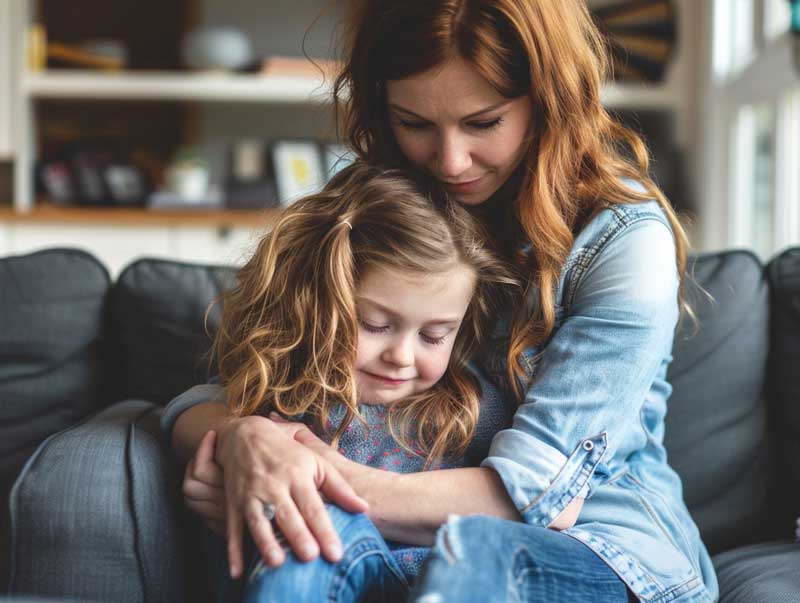
Instead, try validating their experience while communicating confidence in their ability to cope.
Helpful responses include:
- “I can see this feels really hard right now.”
- “Your body is telling you that you’re worried.”
- “I’m here with you.”
- “You don’t have to do this alone.”
- “You’ve handled difficult situations before.”
- “It’s okay to feel nervous and still try.”
Validation helps children feel understood without reinforcing avoidance.
What to Say to a Child with Selective Mutism
Children with selective mutism often experience tremendous pressure surrounding speech.
The more pressure they feel, the harder speaking can become.
Avoid statements such as:
- “Just say hello.”
- “Use your words.”
- “Why won’t you answer?”
- “You talked at home.”
- “Everyone is waiting for you.”
These comments often increase anxiety and make communication even more difficult.
Instead, try:
- “I’m glad you’re here.”
- “Take your time.”
- “You can answer when you’re ready.”
- “It’s okay if you want to nod or point.”
- “I enjoy being with you whether you’re talking or not.”
These responses communicate safety rather than performance expectations.
The CALM Approach for Anxiety
When children become overwhelmed, remember the word CALM:
C – Connect
Focus on the child before focusing on the problem.
Get on their level and communicate:
“I see you’re having a hard time.”
Connection helps reduce the sense of isolation that anxiety often creates.
A – Acknowledge
Name the feeling.
Examples:
- “You seem worried.”
- “This feels scary.”
- “You look overwhelmed.”
Helping children identify emotions is one of the first steps toward regulation.
L – Lower the Intensity
Support the nervous system through calming activities such as:
- Slow breathing
- Walking
- Gentle movement
- Drinking water
- Listening to calming music
- Holding a comfort object
The goal is not to eliminate emotions but to reduce the intensity.
M – Move Forward Gradually
Once the child is calmer, help them identify one small next step.
Anxiety often improves through gradual exposure rather than complete avoidance.
Effective Calming Strategies for Children
Deep Breathing
Teach children to breathe slowly and deeply.
Younger children may enjoy:
- Blowing bubbles
- Pretending to smell flowers and blow out candles
- Slowly blowing a feather across a table
Making breathing playful often increases participation.
Grounding Activities
Grounding helps bring attention back to the present moment.
Try asking:
- What are five things you can see?
- Four things you can touch?
- Three things you can hear?
- Two things you can smell?
- One thing you can taste?
This helps shift attention away from anxious thoughts.
Movement and Physical Activity
Anxiety creates energy in the body.
Movement can help discharge that energy.
Examples include:
- Walking
- Jumping on a trampoline
- Dancing
- Stretching
- Yoga
- Playing outside
Physical activity often improves emotional regulation naturally.
Sensory Supports
Many children benefit from sensory-based calming tools.
Consider:
- Weighted blankets
- Fidget tools
- Soft textures
- Calming scents
- Rocking chairs
- Cozy reading spaces
Different children respond to different sensory experiences.
Helping Children Face Fears Without Pushing Too Hard
One of the biggest parenting challenges is finding the balance between accommodation and encouragement.
Avoiding every anxiety-provoking situation may provide temporary relief but often allows anxiety to grow stronger over time.
At the same time, forcing children into overwhelming situations can increase distress.
Instead, focus on gradual steps.
For example:
Rather than requiring a child with selective mutism to answer a teacher in front of the entire class, the progression might look like:
- Making eye contact
- Nodding yes or no
- Pointing to answers
- Whispering to a trusted adult
- Speaking privately
- Speaking in a small group
- Speaking in larger settings
Small successes build confidence.
Avoid Becoming Anxiety’s Assistant
Parents naturally want to protect their children from discomfort.
However, anxiety often persuades adults to participate in avoidance.
Examples include:
- Ordering food for a child who is capable of ordering
- Answering every question directed toward the child
- Allowing complete avoidance of social situations
While accommodations may be necessary at times, children also need opportunities to practice brave behaviors.
The goal is to support the child—not the anxiety.
Building Confidence Through Emotional Coaching
Children develop resilience when they learn:
- Emotions are manageable
- Anxiety is temporary
- Mistakes are part of learning
- Courage is taking action despite fear
Parents can reinforce these lessons by noticing effort rather than outcomes.

Try praising:
- Trying something new
- Speaking up
- Asking for help
- Taking a small risk
- Using coping skills
Confidence grows through experience, not perfection.
When Professional Support May Help
Consider seeking professional support if anxiety or selective mutism:
- Interferes with school performance
- Affects friendships
- Causes significant family stress
- Limits participation in activities
- Persists despite supportive interventions
- Appears to be worsening over time
Early intervention often leads to better outcomes and can prevent anxiety from becoming more disruptive as children grow.
Final Thoughts
Children experiencing anxiety or selective mutism are not being difficult, stubborn, or manipulative. More often, they are struggling with a nervous system that is working overtime to protect them from perceived threats.
Parents do not need to eliminate every fear or fix every problem. Often, the most powerful support comes from being a calm, steady presence who communicates:
“You are safe.”
“I believe in you.”
“We can handle hard things together.”
When children feel understood, supported, and gently encouraged, they develop the confidence and skills necessary to face challenges, communicate more effectively, and build resilience that will serve them throughout their lives.
How Becoming Exceptional Healing Center & Resources Can Help
At Becoming Exceptional Healing Center & Resources, we provide compassionate, trauma-informed support for children, adolescents, and families experiencing anxiety, selective mutism, emotional regulation difficulties, and social challenges.
Through play therapy, expressive arts, skill-building interventions, parent coaching, family support, and collaboration with schools, we help children build confidence, strengthen coping skills, and develop the tools needed to thrive in their daily lives.
If your child is struggling with anxiety, selective mutism, or emotional regulation challenges, know that help is available, and meaningful progress is possible.