


Most of us have been told at some point to “just work on the relationship” or “focus on the positives” — but if your body and mind are stuck in survival mode, higher-level goals like building trust, self-confidence, or long-term plans can feel impossible.
That’s because human needs follow a natural order, described in psychology as Maslow’s Hierarchy of Needs. This model shows that our brains and bodies prioritize survival before anything else. When lower levels aren’t met, it’s extremely difficult — sometimes impossible — to function well at higher levels.
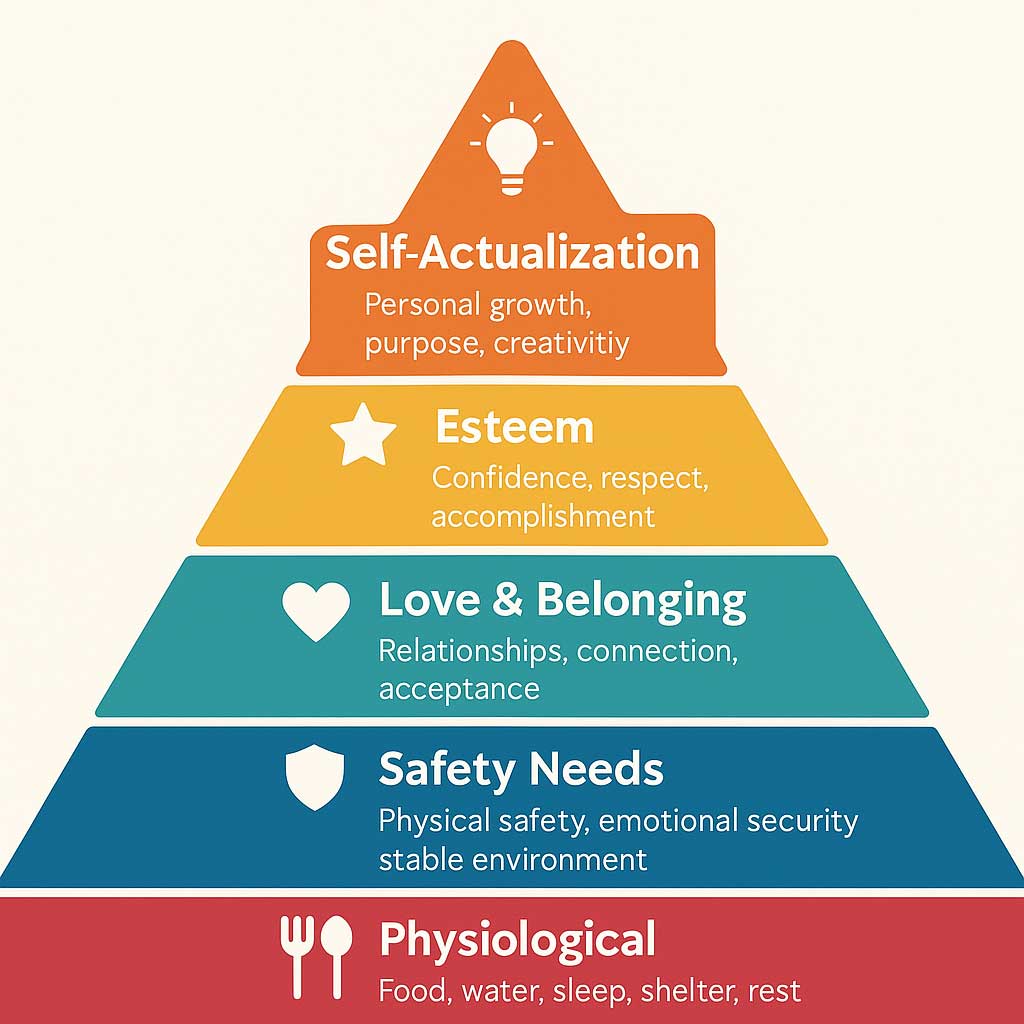
Let’s explore the five levels, how they show up in children, adults, relationships, and work, and what steps you can take to move toward a healthier, more stable place.
Level 1: Physiological Needs — Survival Mode
What it is: Food, water, shelter, sleep, air, rest. These are the body’s most basic needs.
When you’re here: You might be constantly tired, hungry, or physically unwell. Your mind may feel foggy or scattered. For children, this might show as irritability, trouble focusing in school, or frequent meltdowns.
Level 1: Physiological Needs
- Children: Imagine a child coming to school hungry, having missed breakfast or a good night’s sleep. Their brain is focused on basic survival—seeking food and rest—which makes it hard to concentrate or regulate emotions. They might act out or seem distracted, not because they want to misbehave, but because their body is struggling to meet basic needs.
- Adults: Someone working multiple jobs just to pay bills may feel exhausted and unable to engage fully in relationships or work projects. Their decisions and mood are largely influenced by whether they’ve eaten or gotten enough rest.
- Relationships: If one partner is sleep-deprived or physically unwell, they might be irritable or withdrawn, making emotional connection more difficult.
- Work: Employees facing long hours without breaks or poor nutrition may experience burnout, low productivity, and increased conflict with colleagues.
Tips:
- Prioritize consistent meals and hydration.
- Maintain a healthy sleep routine.
- Seek medical care if health issues interfere with daily life.
- Recognize when basic needs aren’t met before pushing for emotional or relational growth.

Level 2: Safety Needs — Stability and Security
What it is: Feeling safe physically, emotionally, and financially. This includes a stable home, reliable income, personal boundaries, and freedom from abuse.
When you’re here: Anxiety is high. You might be on constant alert for danger. Children may cling, withdraw, or become aggressive when they don’t feel safe.
Level 2: Safety Needs
- Children: A child in a home with frequent arguing, unpredictable rules, or inconsistent caregivers may feel unsafe. This might lead to clinginess, hyper-vigilance, or aggressive outbursts. Even if they’re physically unharmed, emotional instability creates a chronic sense of threat.
- Adults: Adults worried about job security, unstable housing, or financial crises may find it hard to focus on anything beyond immediate survival. Anxiety and stress dominate their thinking, making it difficult to plan for the future or invest emotionally in relationships.
- Relationships: Partners trying to build trust while one partner exhibits controlling or unpredictable behavior often struggle because the safety foundation is missing. Attempts at deep emotional work can feel futile if one partner is always “on edge.”
- Work: Employees fearing layoffs or harsh management may avoid risks or innovation, sticking to what’s “safe” but limiting growth.
Tips:
- Identify and reduce environmental stressors.
- Establish predictable routines and clear boundaries.
- Seek financial counseling or social support if needed.
- Use calming techniques like deep breathing or mindfulness.
Level 3: Love & Belonging — Connection
What it is: Relationships, friendships, family bonds, and feeling accepted.
When you’re here: You crave closeness and belonging but can’t fully engage if survival or safety is still uncertain.
Level 3: Love & Belonging
- Children: Kids who don’t feel emotionally connected to family or peers might withdraw socially or act out to gain attention. Even if physical needs and safety are met, missing connection can lead to loneliness and feelings of rejection.
- Adults: Adults recovering from trauma or loss might struggle to trust others or build new friendships. They may long for connection but fear vulnerability.
- Relationships: Couples who have secured safety but still struggle with emotional closeness may experience misunderstandings, distance, or frustration. Building belonging requires consistent communication and shared experiences.
- Work: Employees who feel excluded or unsupported may disengage, reducing collaboration and team morale.
Tips:
- Foster small, consistent social interactions.
- Practice active listening and empathy.
- Encourage shared activities to build connection.
- Seek counseling or support groups to build relational skills.
Level 4: Esteem — Self-Worth and Confidence
What it is: Feeling capable, respected, and valued — both by yourself and others.
When you’re here: You can take pride in accomplishments and trust your own judgment. Without safety and belonging, however, esteem can be fragile or dependent on external approval.
Level 4: Esteem
- Children: A child praised for their effort and achievements gains confidence, but a child constantly criticized may doubt their worth and avoid challenges. Low self-esteem can make it difficult for children to assert themselves or take healthy risks.
- Adults: Adults with strong self-esteem are more likely to set boundaries and pursue goals, while those struggling may avoid leadership or personal growth out of fear of failure or rejection.
- Relationships: Respect and appreciation fuel esteem. When partners consistently invalidate or belittle each other, self-worth suffers and relationship satisfaction declines.
- Work: Employees who feel valued and competent tend to be more engaged and motivated; those who feel under-appreciated often withdraw or become resentful.
Tips:
- Celebrate small achievements and progress.
- Set and maintain healthy boundaries.
- Surround yourself with supportive people.
- Challenge negative self-talk with positive affirmations.

Level 5: Self-Actualization — Purpose and Growth
What it is: Living authentically, pursuing passions, and reaching your fullest potential.
When you’re here: You’re no longer motivated primarily by survival or security, but by personal fulfillment, creativity, and making a positive difference.
Level 5: Self-Actualization
- Children: Children who feel safe, connected, and confident often explore their interests and talents freely, whether in art, sports, or academics. They express creativity and curiosity without fear of judgment.
- Adults: Adults at this level pursue meaningful goals—starting new careers, volunteering, learning new skills, or fostering personal growth. They are motivated by purpose beyond survival or approval.
- Relationships: Partners support each other’s growth, share values, and work toward mutual goals, deepening their connection and fulfillment.
- Work: Employees engaged in self-actualization seek roles that align with their values and allow for innovation, creativity, and leadership.
Tips:
- Identify passions and dedicate time regularly to them.
- Volunteer or engage in community activities.
- Set long-term personal and professional goals.
- Embrace lifelong learning and self-reflection.
Recognizing Your Current Level
Ask yourself:
- Are my basic needs like food, sleep, and safety consistently met?
- Do I feel secure in my environment and relationships?
- Am I able to build meaningful connections with others?
- Do I feel confident and valued in my roles?
- Am I pursuing goals and growth beyond survival?
Your answers help you identify where you are and what to prioritize for healthier functioning.
Why This Matters for Children, Adults, Relationships, and Work
- Children may act out or struggle in school if their lower-level needs aren’t met.
- Adults find it difficult to invest emotionally or professionally if basic needs or safety are lacking.
- Relationships thrive when both partners feel secure, connected, and valued.
- Work environments that meet physiological and safety needs encourage creativity and leadership.
When to Seek Professional Support
If you’re stuck at a lower level despite your efforts—especially if safety is a concern—mental health professionals can help. Therapy can assist with trauma, coping strategies, and steps toward meeting your needs and moving forward.
Final Thought
Maslow’s Hierarchy isn’t a race to the top — it’s a reminder that every level matters. Recognizing where you or your loved ones are on this spectrum helps you provide the right support, patience, and resources needed for growth. At Becoming Exceptional Healing Center & Resources, we’re here to meet you where you are and help you build a stronger foundation for healing and fulfillment.